Ascenti Reach app
Manage your recovery and access tailored video guides directly from your phone.
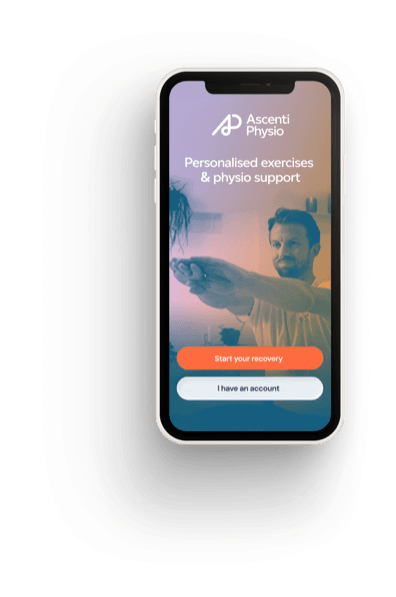
Ascenti Reach app
Manage your recovery and access tailored video guides directly from your phone.

Feel relief from back, neck and joint pain, and learn effective exercises to keep it away for good.
Back pain is a common complaint that can affect different people in different ways. Here we talk through the common symptoms, causes and treatment.
Back pain is by far the most common reason that people come for physiotherapy and is often misunderstood.

Back pain accounts for 40% of working days that are missed and around one-third of the UK population will experience it every year.
Lower back pain, or what we call pain in the lumbar spine, is the most common.
The majority of back pain is not caused by anything serious and it is important to remember that it is not a ‘disease’.
Back pain will usually go away on its own or with the right management within six weeks.
It’s important to understand back pain to improve recovery and prevent future reoccurrence.
The back isn’t a single bone, muscle or structure.
You have 24 separate bones called vertebrae that make up your spine. Around each of these you have a small disc that acts as a shock absorber when you twist or bend the vertebrae.
The disc is made up of cartilage and contains fluid to help with movement. As you get older, the fluid in the disc tends to reduce which makes your back less flexible.
Right at the bottom of your spine (the area you sit on) you have your sacrum and coccyx, which are smaller bones that tuck inwards slightly.
You have a long cord that runs through your spine and transports nerve signals between your whole body and your brain.
Around your spine you then have a range of connective muscles, ligaments, tendons, tissues and nerves.
When you put all of these components together you have a sophisticated and complex structure.
Your back is strong and perfectly designed to keep you upright and to support the millions of small tasks and movements that you complete every day.
Most of the components in your back are pain sensitive, which is why you experience back pain if they are under abnormal stress or overloaded.
Back pain can affect different people in different ways.
It is usually either pain or stiffness, but can also be a combination of both.
It may be a sharp pain that starts suddenly or a small discomfort that gradually increases over time.
The pain may feel focused to a particular area for some, but for others it may feel like it moves around and transfers to other areas.
The below are common symptoms of back pain:

Are there different types of back pain?
There are many different types of back pain and clinical diagnosis, but for the purposes of this article let’s look at the two main areas that we see.
The first is what we call ‘back dominant pain’. This is typically felt around the spine and possibly radiating into the buttocks.
People with back dominant pain can experience spasms and usually find that certain positions or movements aggravate the pain.
The second type of back pain that we commonly see is ‘leg dominant pain’. This is where the pain is felt more down the legs than in the back.
One form of leg dominant pain is sciatica. Sciatica tends to be felt down the back of the leg and often in the hamstrings.
Another presentation of leg dominant pain is when patients only feel the pain when walking or standing and often describe a heaviness that gets worse in the legs.
lorem ipsum dolor sit amet consectetur adipiscing elit et laboris ut omnis deserunt autem et occaecat harum reprehenderit nam commodo ipsum ut praesentium deserunt facilis voluptas qui in quos nulla facilis mollit sed expedita minus quos minus nobis dolorum quos harum ducimus in quibusdam sint voluptas eiusmod nobis sint est
lorem ipsum dolor sit amet consectetur adipiscing elit et laboris ut omnis deserunt autem et occaecat harum reprehenderit nam commodo ipsum ut praesentium deserunt facilis voluptas qui in quos nulla facilis mollit sed expedita minus quos minus nobis dolorum quos harum ducimus in quibusdam sint voluptas eiusmod nobis sint est
lorem ipsum dolor sit amet consectetur adipiscing elit facilis enim ipsum et et et dolorum et libero mollitia illum mollit sint corrupti fugiat et tempor fugiat non incididunt in distinctio nihil quos odio laborum praesentium quod ex officia quidem nihil vero nostrud culpa aliquip quo autem nam ex ut eu excepteur amet et similique do ut quod ut eiusmod laboris ad autem deserunt id provident qui non in est esse quos aliquip est pariatur optio repellendus nisi fugiat do aute
lorem ipsum dolor sit amet consectetur adipiscing elit et laboris ut omnis deserunt autem et occaecat harum reprehenderit nam commodo ipsum ut praesentium deserunt facilis voluptas qui in quos nulla facilis mollit sed expedita minus quos minus nobis dolorum quos harum ducimus in quibusdam sint voluptas eiusmod nobis sint est
lorem ipsum dolor sit amet consectetur adipiscing elit et laboris ut omnis deserunt autem et occaecat harum reprehenderit nam commodo ipsum ut praesentium deserunt facilis voluptas qui in quos nulla facilis mollit sed expedita minus quos minus nobis dolorum quos harum ducimus in quibusdam sint voluptas eiusmod nobis sint est
lorem ipsum dolor sit amet consectetur adipiscing elit et laboris ut omnis deserunt autem et occaecat harum reprehenderit nam commodo ipsum ut praesentium deserunt facilis voluptas qui in quos nulla facilis mollit sed expedita minus quos minus nobis dolorum quos harum ducimus in quibusdam sint voluptas eiusmod nobis sint est
lorem ipsum dolor sit amet consectetur adipiscing elit facilis enim ipsum et et et dolorum et libero mollitia illum mollit sint corrupti fugiat et tempor fugiat non incididunt in distinctio nihil quos odio laborum praesentium quod ex officia quidem nihil vero nostrud culpa aliquip quo autem nam ex ut eu excepteur amet et similique do ut quod ut eiusmod laboris ad autem deserunt id provident qui non in est esse quos aliquip est pariatur optio repellendus nisi fugiat do aute
lorem ipsum dolor sit amet consectetur adipiscing elit et laboris ut omnis deserunt autem et occaecat harum reprehenderit nam commodo ipsum ut praesentium deserunt facilis voluptas qui in quos nulla facilis mollit sed expedita minus quos minus nobis dolorum quos harum ducimus in quibusdam sint voluptas eiusmod nobis sint est
Find your nearest clinic
300+ UK based clinics


Sanika was very helpful, got my knee feeling 100% better after 4 weeks. Highly recommend

Back on the tennis court within three weeks. The Reach App made all the difference between appointments.

All the appointments I have had with Justin at the chorley health centre have been excellent, treatment plans, advice given all well received.


Every Ascenti patient receives free access to the Reach app — home exercise programme, video guides, and a direct feedback loop with your physio.

